
Commercial Foam Roof Restoration • Mesa, Arizona • Roughly 250,000 Sq Ft Across 27 Occupied Buildings • Completed by Five Guys Roofing
Mesa Commercial Foam Roof Restoration: Recoating Roughly 250,000 Square Feet Across an Occupied Multifamily Community
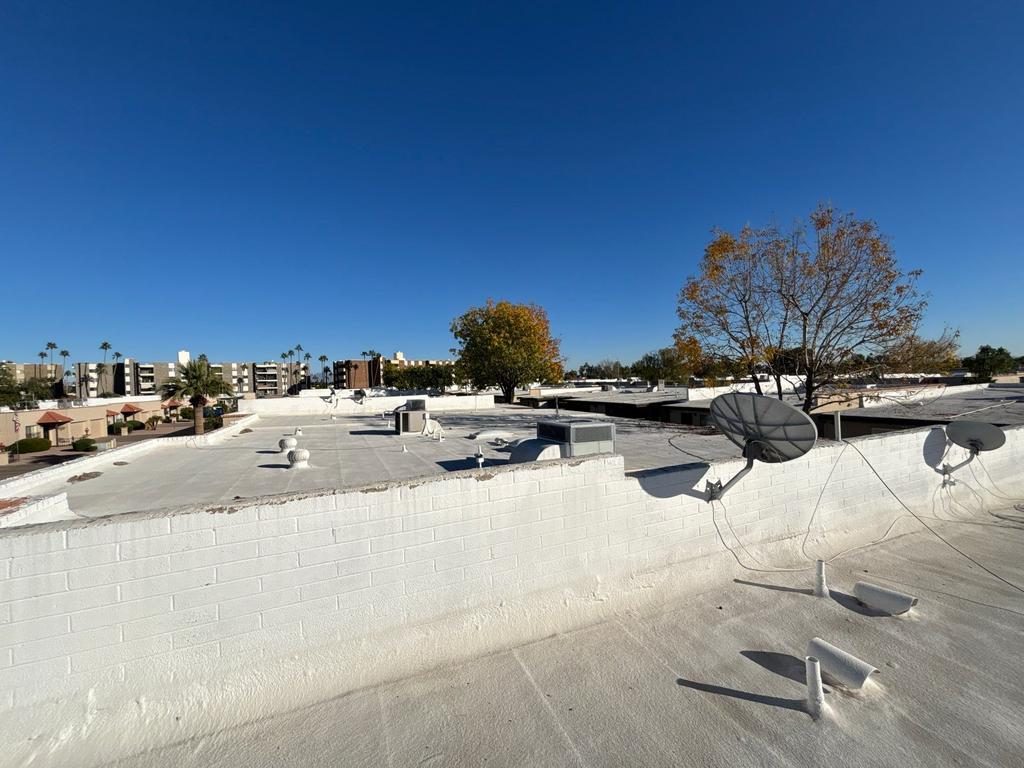
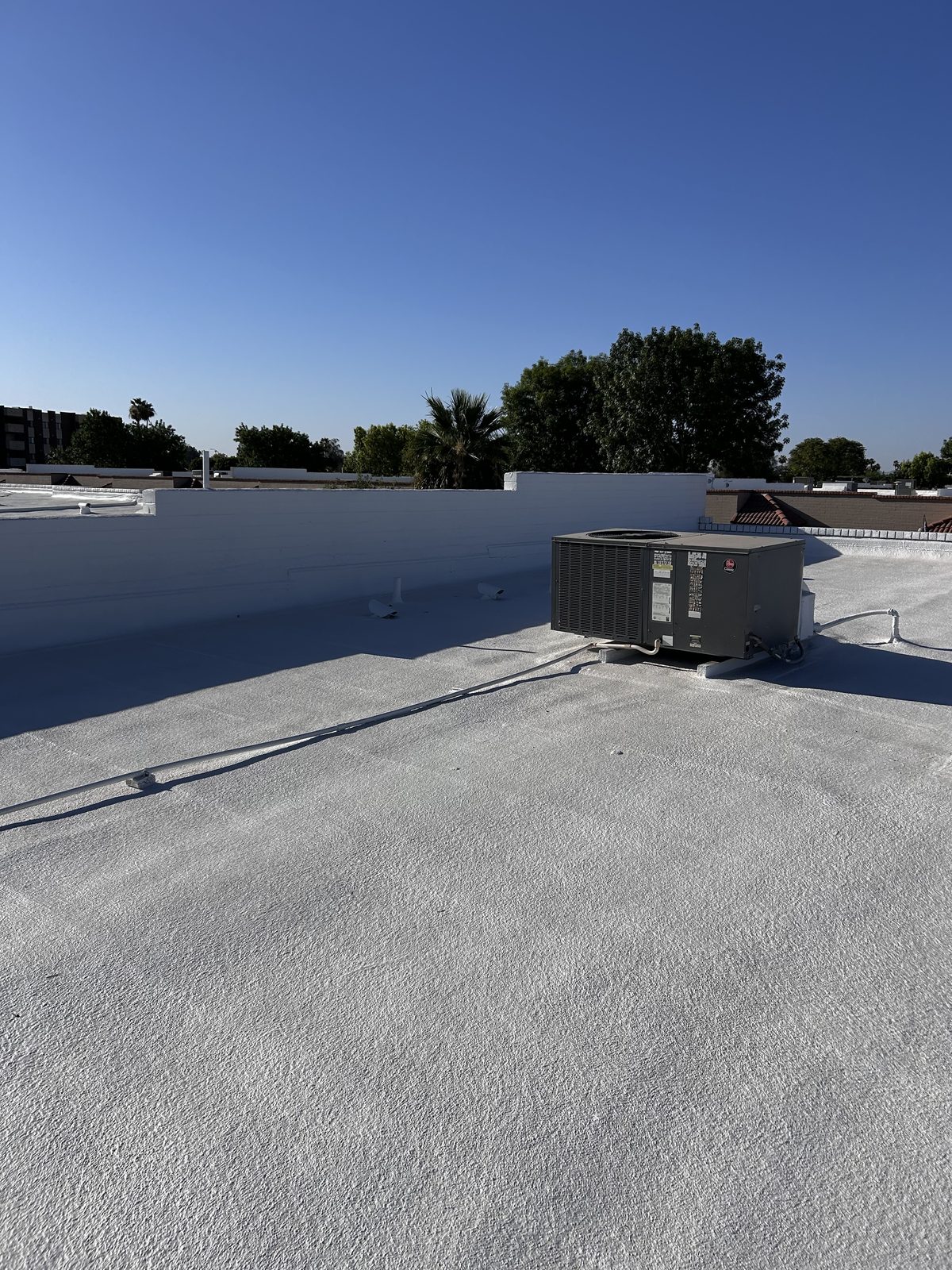
Five Guys Roofing completed this foam roof restoration for a Mesa multifamily community, covering 27 buildings and a clubhouse without relocating a single resident. Some details have been generalized to protect the property owner’s privacy, while keeping the scope, materials, and sequencing clear.
City
Mesa, AZ
Property Type
Apartment community, single story
Roof System
Existing sprayed polyurethane foam, low slope
Service
Commercial foam roof restoration and recoat
Scale
Roughly 250,000 sq ft across 27 buildings plus clubhouse
Warranty
10 Year Warranty
Pricing and What Drives It
Approved project total: $340,000. That worked out to $1.35 per square foot. The main cost drivers were the sheer roof area, the age and condition of the existing foam, the volume of foam repair needed before coating, the number of rooftop penetrations and mechanical units requiring hand detailing, and the choice of a thicker coating spec to earn the longer warranty term.
Typical published range for commercial foam roof restoration at this scale: $1.00-$1.35 per square foot, depending on coating thickness and warranty term. On this property we quoted both ends of that range and the owner selected the higher spec.
The Situation
The community’s management company asked Five Guys Roofing for a general roof inspection with overall condition and recommendations, along with pricing to recoat the existing foam roofs. They specifically wanted to see both a 5-year and a 10-year option so the board could weigh cost against service life. We inspected the property in December 2025 and documented the condition of every building.
- A foam roof system more than 15 years old across the whole community
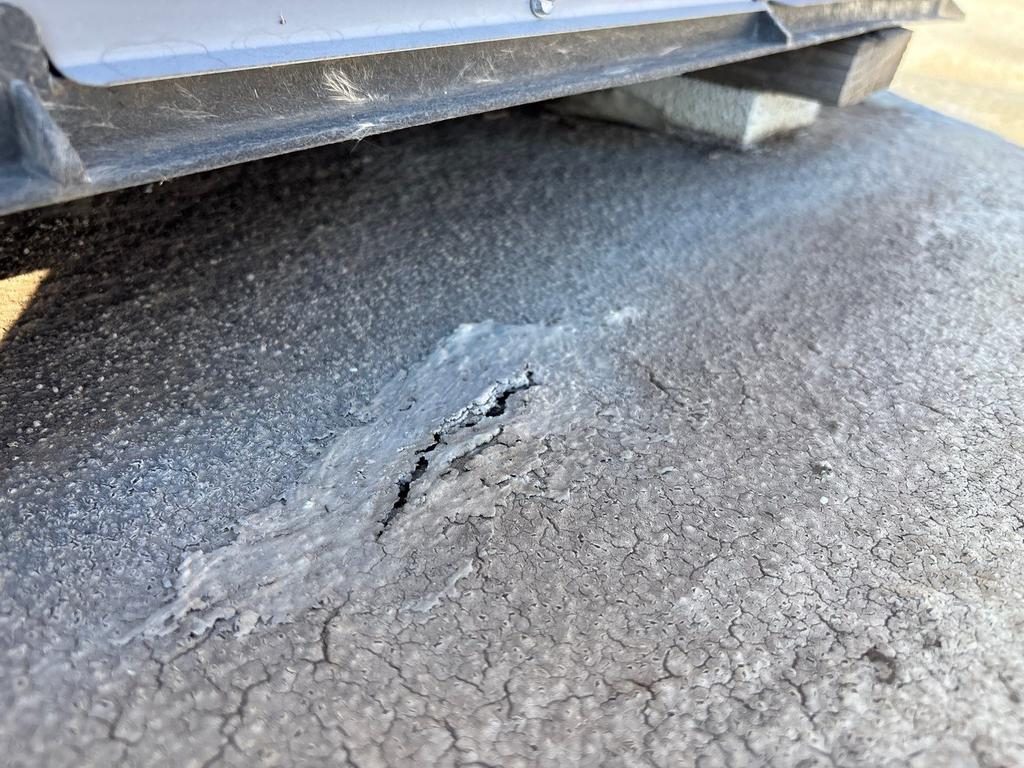
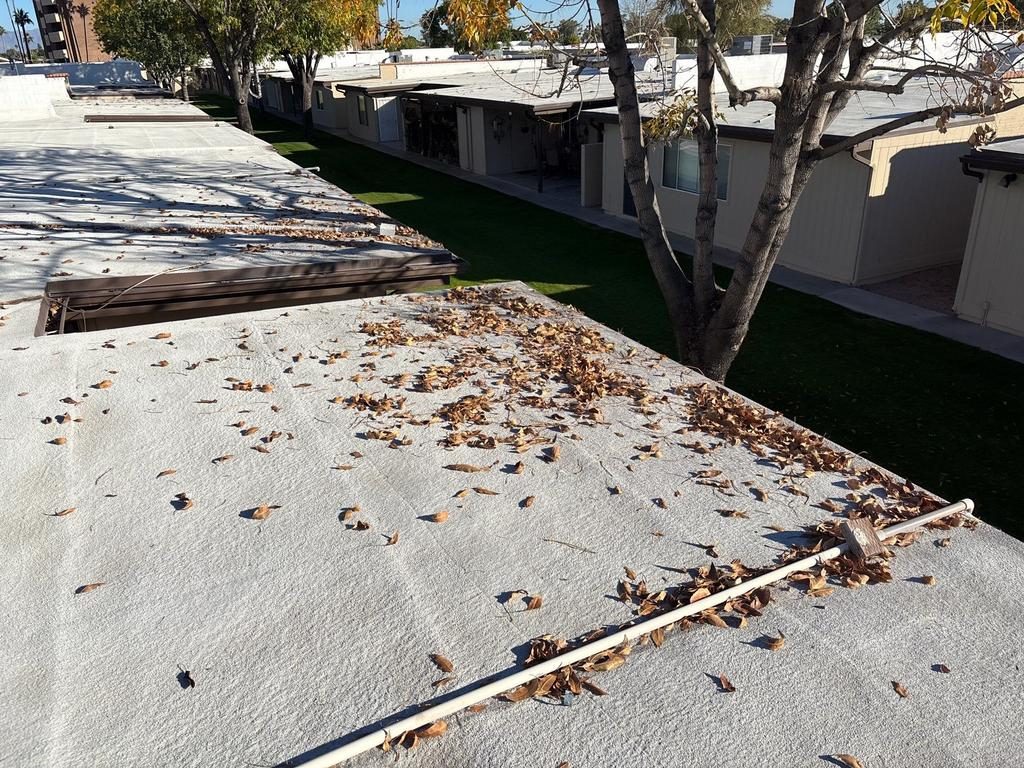
- Coating that had weathered, chalked, and cracked through to the foam in places
- Blistering in the existing foam and low areas holding water
- Deteriorated sealant at penetrations, drains, and scuppers
- A decision to make between a shorter-term recoat and a longer-term restoration
What Was Causing It
This was straightforward end-of-life wear rather than a single failure point. Elastomeric coating over foam is a sacrificial layer. After 15-plus years of Arizona sun it thins, chalks, and cracks, and once it opens up, the foam underneath starts taking on water and blistering. Add sealant that had gone brittle at pipes, vents, drains, and scuppers, plus a few low spots that never drained properly, and the roof was overdue for renewal across the board.
How We Verified the Roof Condition
Because this was a whole-community project, our roof inspector walked and photographed every building before we priced anything. That let us size the foam repair volume, break the property into three pricing groups, and give the board a per-building picture of how the total came together.
- Walked and photographed all 27 buildings plus the clubhouse, documenting surface condition, blistering, ponding, and penetration detail
- Measured roughly 250,000 square feet of roof area, including the coverage carried up the parapet walls
- Priced the property in three groups so the board could see how the total was built up
- Quoted two specs side by side: a 2-gallon system at $1.00 per square foot and a 3-gallon system at $1.35 per square foot
- Confirmed staging constraints for an occupied, single-story community
The owner approved the 3-gallon, longer-warranty option in March 2026.
The Plan
The plan was to restore the foam already on the buildings rather than tear it off. On a roof this size that is the difference between a recoat and a full replacement, and the existing foam was sound enough to keep once the blisters and ponding areas were addressed. Work would move building by building so residents kept normal access, with a pre-job walk to set staging, then wash, foam repair, and coating phases sequenced across the property.
Materials and Components Used
- Primer: 110 gallons of Pro Tech AP primer over the existing roof as needed
- Base Coat: 3,784 gallons of Pro Tech FG50 white elastomeric at 1.5 gallons per 100 square feet, back rolled
- Top Coat: 3,784 gallons of Pro Tech FG50 white elastomeric at 1.5 gallons per 100 square feet, back rolled
- Foam Repair: 190 gallons of NCFI 2.8 lb density closed-cell polyurethane roofing foam
- Reinforcing Fabric: Tytek in 6 inch, 12 inch, and 40 inch widths for three-course repairs at drains, scuppers, and cracks
- Sealant: 26 buckets of Tropical acrylic putty at penetrations, pipes, vents, and cracks
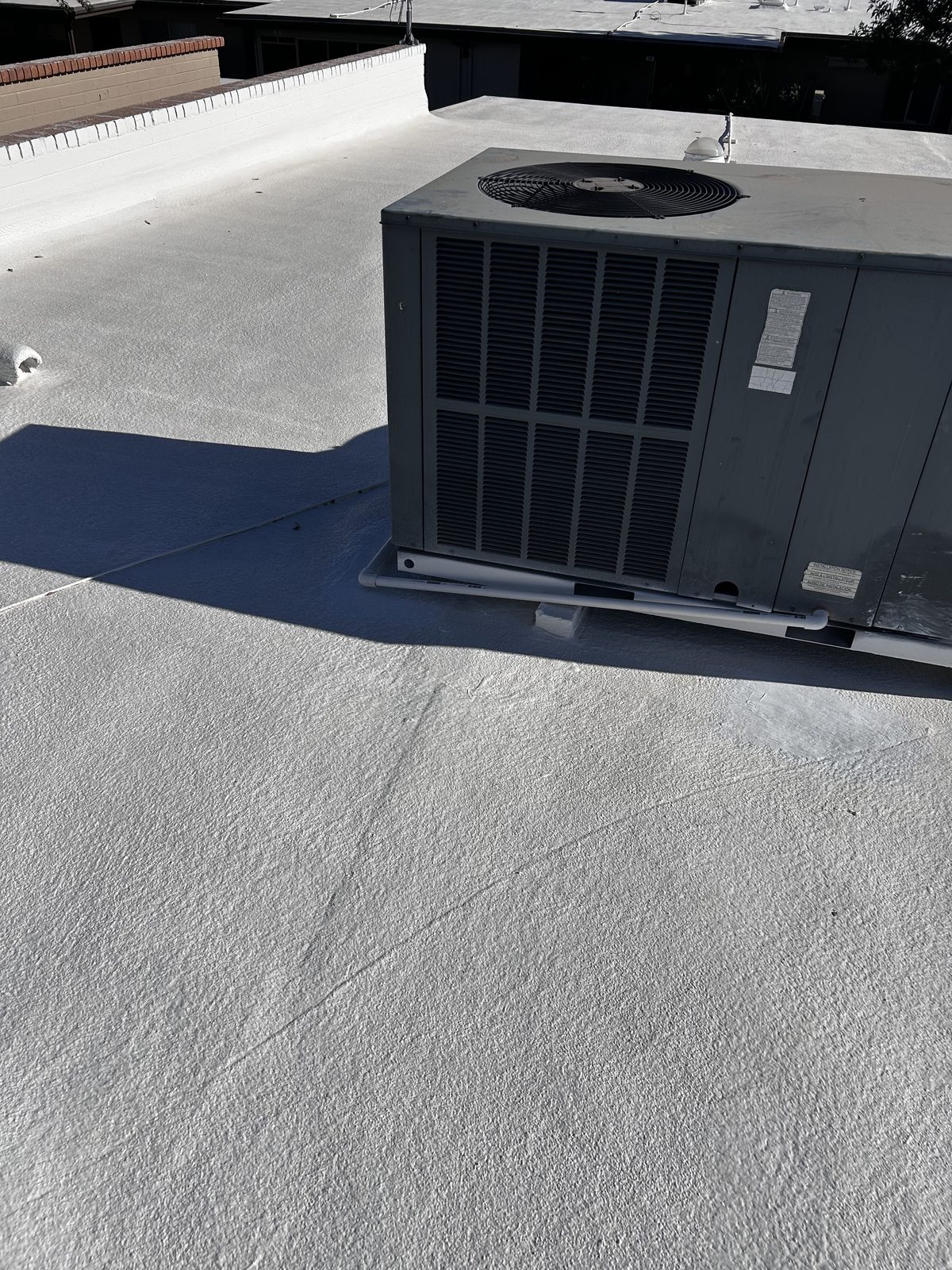
- Coverage Detail: Coating carried 2 to 4 feet up the parapet walls and hand detailed around every penetration, rooftop unit, and AC unit
Step-by-Step Work
Pre-Job Walk, Staging, and Site Safety
We started with a pre-job walk to plan building sequence and crew staging across an occupied community. Safety requirements were followed throughout, and cones and site markings went out ahead of each building so residents could see where crews were working and route around them. Coordination was arranged with property management, and rooftop satellite dishes that sat in the work area were tracked so they could be handled with the residents affected.
Pressure Wash and Surface Preparation
Each roof was pressure washed to strip years of dirt and debris buildup, and job-related debris was hauled off site. Once the surface was clean and dry, we applied acrylic putty sealant with reinforced fabric around roof pipes, vents, cracks, and other penetrations, ran three-course repairs with fabric and coating at drains, scuppers, and cracked areas, and primed the existing roof where adhesion needed help.
Foam Repairs and Drainage Correction
Blistered foam was cut out and replaced with NCFI 2.8 lb density closed-cell polyurethane roofing foam. We also built up low, ponding areas with additional foam so water would move to the drains instead of sitting on the roof. This is the step that decides whether a recoat lasts, so it happened before any coating went down.
Two-Coat Elastomeric Application
We applied a white elastomeric base coat at 1.5 gallons per 100 square feet, back rolled and carried up the parapet walls, then a matching top coat at the same rate. Coating was hand detailed around all roof penetrations, rooftop equipment, and AC units, and existing roof drain covers were reinstalled once the surface cured.
Per-Building Quality Walks, Punch List, and Closeout
Every building got a quality walk, a touch-up pass, and a final walk. Items found on those walks were tracked to a written punch list building by building: coating touch-ups around AC units, loose wiring clipped and sealed under coating, and AC condensation lines reconnected where crews had to work around them. A resident-affecting item, such as a cable line clipped during the work, was resolved directly and made good. All punch list items were confirmed complete in June 2026, final photo documentation was produced, and the warranty was issued.
Results
The community came out of this with the same roof structure and a fully renewed weather surface. On-site production ran from late April to late May 2026, with punch list and closeout work finishing in June. Because the work was a restoration rather than a tear-off, there was no roof removal, no structural disruption, and no resident relocation at any point across 27 buildings.
This restoration closed out under a 10 Year Warranty, a limited flat-roof restoration warranty for the property. The approved scope carried a 10-year product warranty from the coating manufacturer plus a workmanship warranty from Five Guys Roofing, and it includes free yearly inspections at the owner’s or the owner’s representative’s request. Standard exclusions apply, including areas under non-curb-mounted mechanical equipment where full access is not available, storm damage, damage from other trades or foot traffic, water that stands longer than 48 hours because of deck slope beyond our scope, and lack of routine maintenance such as keeping drains clear.
Before and After
A side-by-side recap of the failing coating surface and the restored, hand-detailed roof system that replaced it.
FAQ
Do residents or tenants have to move out during a foam roof restoration?
No. On this project all 27 buildings and the clubhouse stayed occupied from start to finish. A restoration involves no tear-off, so there is no open roof deck and no structural work. We sequenced one building at a time, set out cones and site markings ahead of each crew, and coordinated with property management so residents knew where work was happening.
How disruptive is the work day to day?
The noticeable phases are pressure washing and coating application, both of which happen on the roof. Crews need some space to stage equipment, which is why parking and walkway routing get planned at the pre-job walk. Rooftop items that belong to residents, such as satellite dishes and AC condensation lines, get tracked so they are handled and put back.
What drives the cost of a project this size?
Area first, then condition. This project was $340,000 at $1.35 per square foot. Beyond raw square footage, the drivers were how much of the existing foam needed cutting out and replacing, how many penetrations and mechanical units required hand detailing, and the coating thickness chosen. We quoted a 2-gallon system at $1.00 per square foot and a 3-gallon system at $1.35 per square foot on the same roof, and the higher spec carried the longer warranty.
Why restore the existing foam instead of replacing the roof?
Because the foam itself was still serviceable. What had failed was the coating over it, plus localized blistering and a few ponding areas. Restoring the existing system meant no tear-off, no disposal of the old roof, no exposed deck, and a materially lower cost per square foot than a replacement across 27 buildings.
What warranty comes with a restoration like this, and how do we keep it?
This project closed out under a 10 Year Warranty, with a 10-year manufacturer product warranty on the coating plus workmanship coverage from Five Guys Roofing, and free yearly inspections on request. Keeping it in force comes down to routine maintenance: keep the drains clear, schedule the annual inspection, and have any new rooftop penetrations or equipment work coordinated so the coating gets detailed back in properly.
Have more questions? Check out our FAQ page.
Managing a Foam Roof in the Phoenix Metro?
If you oversee a multifamily, HOA, or commercial property with foam roofing, request a commercial roof inspection. We will document the condition building by building, tell you whether a restoration or a replacement is the right call, and price the options side by side so your board or ownership group can make the decision with real numbers.
Five Guys Roofing · (480) 892-5311 · ROC# 301077 & ROC# 301076 · fiveguysroofing.com
We do not publish addresses, property names, or client-identifying details.
